
A vacant apartment does not just represent lost rent. It can quickly become a harder-to-market listing, especially when prospective tenants scroll past dim photos, empty rooms, and a floor plan they cannot picture themselves living in. Learning how to reduce apartment vacancy means treating every available unit as a product that needs to feel desirable, functional, and ready for someone to call home.
For property managers, owners, developers, and investors across Union, Essex, and Morris Counties, that work begins well before a prospect arrives for a showing. The strongest leasing strategy combines smart pricing, quick turn times, high-impact presentation, and a clear understanding of what today’s renter wants from a comfortable living space.
Start With the Vacancy Story, Not Just the Days Vacant
A unit that sits for 10 days may not require the same response as one that has gone unleased for 45. Before adjusting rent or adding concessions, look at the complete leasing picture: traffic, inquiry volume, showing activity, applications, feedback, and the condition of competing properties.
If few people are viewing the listing, the problem may be visibility, photography, price positioning, or a weak first image. If prospects are touring but not applying, the apartment itself may be failing to create an emotional connection. If applications arrive but do not convert, the issue may be response time, lease terms, screening friction, or an unclear move-in process.
This distinction matters. Reducing the rent may fill a unit, but it also affects revenue expectations for the building. Improving the listing and presentation can often create stronger interest without immediately sacrificing monthly income.
Make Every Apartment Feel Move-In Ready
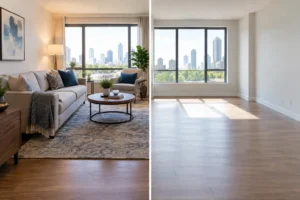
Empty rooms rarely communicate value on their own. Even a beautifully renovated apartment can feel smaller, colder, or more awkward when it is vacant. A buyer or renter should not have to work hard to understand whether a sectional fits in the living room, where they would dine, or how a bedroom could become a calming retreat.
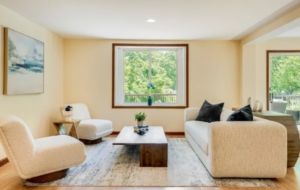
Strategic furnishing solves that problem. It establishes scale, shows flow, and gives each room a purpose. A thoughtfully styled one-bedroom can make a compact footprint feel intentional rather than limited. In a larger apartment, furniture can define flexible zones for working from home, entertaining, and relaxing.
The goal is not to fill every corner. It is to create a polished, livable experience that helps prospects imagine their own life in the space. Clean-lined furniture, layered lighting, fresh artwork, rugs, greenery, and edited accessories can make an apartment feel elevated without looking overly decorated.
For a building with multiple vacancies, a model unit can be especially effective. It gives leasing teams a memorable destination for tours and offers a visual benchmark for every available floor plan. In some cases, furnishing the actual vacant unit is the stronger choice, particularly when its layout, view, or location needs help standing apart.
Build a Listing That Earns the Showing
Your online listing is the first tour. If it does not stop the scroll, a prospect may never see the apartment in person.
Photography should lead with the room that creates the strongest emotional pull, often a bright living area, a well-appointed kitchen, or a view. Images need to be current, well lit, and consistent with the actual apartment. Wide-angle photography can be useful, but overly distorted images can create disappointment during a showing.
A furnished or professionally staged unit photographs with more depth and clarity. Instead of a blank rectangle, the lead image becomes a lifestyle moment: a light-filled living room, an inviting dining setting, or a bedroom that feels like a personalized sanctuary. Those visual cues can increase clicks and make the asking rent feel more justified.
Listing copy should support the images with specifics. Replace vague phrases such as “beautiful apartment” with details that help renters make decisions: in-unit laundry, dedicated parking, updated appliances, outdoor space, package handling, fitness access, pet policies, commute convenience, or included utilities. Be clear about availability, lease duration, fees, and qualifications. A transparent listing attracts more qualified prospects and reduces time spent answering avoidable questions.
Price With Precision, Then Protect the Asset
Competitive pricing is essential, but it should be based on the unit’s true alternatives, not just a broad average for the neighborhood. Compare comparable apartments by bedroom count, condition, amenities, parking, location, and lease term. A renovated apartment with a dedicated workspace does not compete exactly the same way as an older unit with the same number of bedrooms.
When a price adjustment is necessary, make it purposeful. A small reduction can be more effective when paired with refreshed photos, newly furnished rooms, and a relaunch of the listing. Otherwise, the market sees a lower price but no new reason to act.
Concessions can also work, particularly during seasonal slowdowns or lease-up periods. One month free, a waived amenity fee, or a move-in credit may motivate a qualified renter while preserving the advertised rent. The trade-off is that concessions can condition prospects to wait for deals, so they should be measured against the carrying cost of continued vacancy.
Reduce Turn Time Between Residents
The fastest way to reduce apartment vacancy is often to shorten the gap before the apartment is listed. Start turnover planning as soon as notice is received, not after keys are returned.
Schedule inspections early when possible. Order materials before move-out. Coordinate cleaning, painting, repairs, and photography in a tight sequence. A unit that sits waiting for a minor maintenance item is losing more than time – it is losing momentum.
Create a consistent turn standard so every apartment meets the same visual and functional expectations. Walls should be clean, lighting should work, hardware should feel secure, and surfaces should be free of leftover damage or clutter. Small details carry real weight in a showing. A loose cabinet pull or burned-out bulb can suggest that larger issues may be waiting behind the walls.
For properties with frequent turnover, having a reliable furnishing and installation partner can make a meaningful difference. Set the Stage® helps owners and property managers prepare apartments, model units, and shared spaces with designer-led furnishings that make a stronger first impression without adding another complicated vendor process.
Make Leasing Response Time a Competitive Advantage
A prospect who submits an inquiry after work may contact three other properties before morning. The first clear, helpful response has a better chance of securing the tour.
Set standards for responding to calls, emails, web forms, and direct messages. Automated acknowledgments are useful, but they should be followed by a real answer that includes availability, pricing, next steps, and straightforward scheduling options. If a unit is no longer available, offer an alternative floor plan or upcoming opening rather than ending the conversation.
During tours, guide the experience rather than simply opening the door. Point out practical benefits, but allow the apartment to do its own work. A furnished space gives renters natural moments to pause, picture themselves hosting friends, working near a window, or winding down at the end of the day.
Follow up promptly after every showing. A concise message asking whether they have questions or would like to begin an application can recover interest that might otherwise fade.
How to Reduce Apartment Vacancy With Better Resident Retention
Vacancy prevention begins while residents are still living in the building. Retaining a good renter is generally less expensive than marketing, turning, and leasing the apartment again.
Pay attention to maintenance response, communication, cleanliness, security, and the condition of common areas. Residents notice whether hallways feel cared for, whether package areas are organized, and whether shared amenities look inviting or neglected. In multifamily communities, these spaces are part of the resident experience and part of your leasing presentation.
Renewal conversations should begin early enough to be useful. Ask what would encourage the resident to stay, especially when the request is reasonable and less costly than a full turnover. Not every renter can be retained, but a thoughtful renewal strategy gives owners more time to forecast availability and prepare the next leasing campaign.
Turn Empty Space Into a Clear Yes
Apartments lease faster when they remove uncertainty. Prospects need to see value online, feel it in person, and receive a timely path to move in. That may mean adjusting price, but it can also mean better photos, a sharper listing, a faster turn, or a furnished room that finally shows what the space can become.
The next available apartment is an opportunity to create that feeling before the first prospect walks through the door. When a unit looks cared for, functions beautifully, and feels ready for real life, it becomes easier for the right renter to say yes.