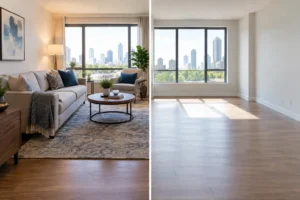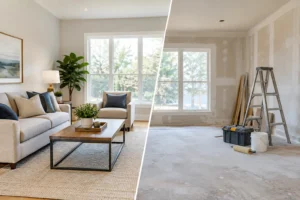
A vacant listing has no distractions, but it also has no story. Buyers walk into empty rooms and start asking practical questions: Will my sectional fit here? Is this bedroom too small? Where would we eat, work, relax, or host friends? Vacant home staging services answer those questions before a buyer has time to doubt the space.
For agents, sellers, builders, and investors across Union, Essex, and Morris Counties, professional staging turns an unoccupied property into a polished, photo-worthy home buyers can picture themselves living in. The goal is not simply to fill rooms with furniture. It is to create an immediate emotional connection, clarify each room’s purpose, and make the property feel ready for its next chapter.
Why Empty Homes Need More Than Great Photos
Online listing photos create the first showing long before a buyer arrives at the front door. In an empty home, wide-angle photography can make rooms appear flat, cold, or oddly proportioned. A beautiful renovation may still feel unfinished without the warmth, scale, and visual rhythm that furniture and décor provide.
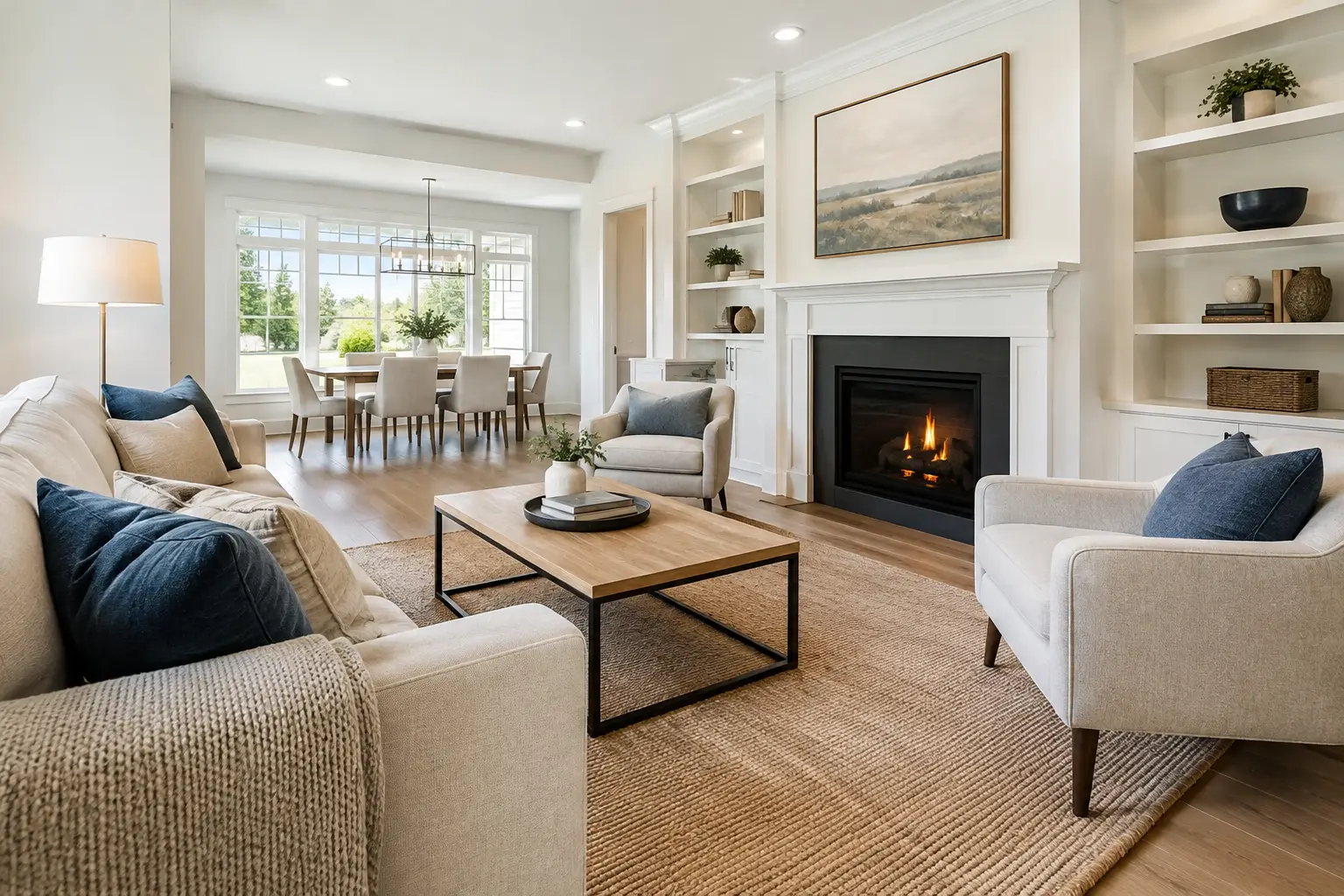
Staging gives the camera something to work with. A tailored sofa arrangement establishes the living room’s scale. A dining table suggests easy entertaining. Layered bedding turns an ordinary bedroom into a comfortable retreat. Art, lighting, greenery, and thoughtfully chosen accessories add dimension without competing with the home’s architecture.
The effect carries into the in-person showing. Buyers do not have to imagine whether a room works. They can see a lifestyle taking shape in front of them. That matters in a competitive market, where a property that feels memorable is more likely to stay top of mind after a full day of tours.
What Vacant Home Staging Services Actually Do
Professional staging is a sales strategy expressed through design. It begins with a close look at the property, its likely buyer, its price point, and its strongest selling features. A starter home, a luxury colonial, a downtown condo, and a newly built townhome should not be staged with the same visual language.
A well-planned staging installation typically prioritizes the spaces that influence buyer perception most: the entry, main living area, kitchen or dining zone, primary bedroom, and key secondary rooms. Depending on the layout, that may include a home office, finished basement, family room, or outdoor entertaining area. Each space is furnished to show function, flow, and appropriate scale.
At Set the Stage®, the work is designed around how a property needs to perform in the market. Fresh, modern furnishings and décor help create a cohesive look that feels elevated but approachable. Professional teams handle delivery, placement, styling, and removal, giving busy agents and property owners a clear path from empty house to market-ready listing.
Staging Is Not Interior Decorating
Decorating is personal. It reflects the tastes, routines, and collections of the people who live in a home. Staging is intentionally broader. It uses a restrained, buyer-focused point of view to help more people feel at home in the space.
That distinction is especially useful for sellers who assume staging requires an expensive, permanent redesign. Temporary staging is a targeted presentation investment. It puts the attention where it can have the greatest impact: the rooms buyers will photograph, remember, and use to judge the property’s value.
The Business Case: Perception Shapes Price Conversations
A vacant house can make buyers focus on flaws. Without furnishings to establish scale, a compact bedroom can feel smaller than it is. An open floor plan can feel undefined. A bonus room can become a question mark rather than an opportunity.
Staging redirects that attention. It shows that the living room can comfortably host conversation, that the dining area has purpose, and that the extra room can support work, exercise, guests, or play. The property feels more complete, which can make its asking price feel more credible.
No staging company can promise a specific sale price or timeline. Market conditions, location, listing strategy, property condition, and pricing still matter. Yet staging strengthens the parts of the process that are within a seller’s control: visual presentation, first impressions, perceived value, and buyer confidence.
For investors and flippers, that can mean a stronger launch after months of construction and carrying costs. For builders and developers, it can help a model or spec home communicate the lifestyle behind the floor plan. For agents, it creates marketing assets that support listing presentations, social media, open houses, and buyer follow-up.
How to Choose the Right Scope of Staging
Not every vacant property needs the same amount of furniture. The right scope depends on the home’s size, price range, buyer profile, and the rooms that require the most visual support.
A smaller condo may need a focused package that defines the living area, dining zone, and primary bedroom. A larger single-family home may benefit from fuller staging across multiple bedrooms, a family room, office, basement, and outdoor space. In a luxury listing, the details often carry more weight. Layered textiles, statement art, premium accessories, and purposeful vignettes can reinforce the level of living buyers expect.
There is a trade-off to consider. Partial staging can control upfront costs, but under-furnishing a large or complex home may leave important rooms feeling unresolved. Full staging makes the strongest visual statement, particularly when the property will be extensively photographed or shown to buyers seeking a move-in-ready experience. A professional consultation can identify where investment will matter most.
Timing Matters Before the Listing Goes Live
The best time to plan staging is before photography, not after the listing has sat without activity. Coordinate staging once cleaning, repairs, paint, and final construction details are complete. That way, the home enters the market at its best rather than receiving a mid-listing refresh after buyers have already formed an impression.
Agents can also use the pre-listing conversation to set expectations with sellers. Explain that staging is part of the marketing plan, much like professional photography and careful pricing. When the service is positioned as a practical tool for attracting attention and supporting stronger offers, sellers can evaluate it as a business decision rather than an optional decorative expense.
For eligible sellers, flexible options such as stage-now-pay-at-close financing may make it easier to prepare the home without delaying the launch. The important thing is to make staging part of the listing strategy early enough for every detail to work together.
A Better Showing Starts With a Clear Feeling
The most effective staged homes do more than look attractive. They make buyers feel oriented, welcomed, and able to imagine a life there. The entry feels intentional. The living room invites connection. The primary suite offers a quiet place to reset. Even a small office corner can suggest that the house supports the way people live now.
That emotional clarity is valuable because buyers rarely remember every specification after several showings. They remember the homes that felt right. When a vacant property gives them that feeling from the first photo through the final walkthrough, it has a stronger chance to stand apart.
Before your next listing hits the market, give buyers more than empty square footage to evaluate. Give them a comfortable living space they can picture coming home to – and a reason to fall in love before someone else does.