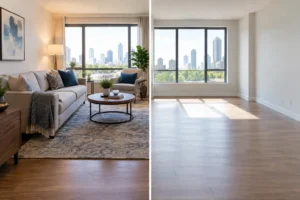
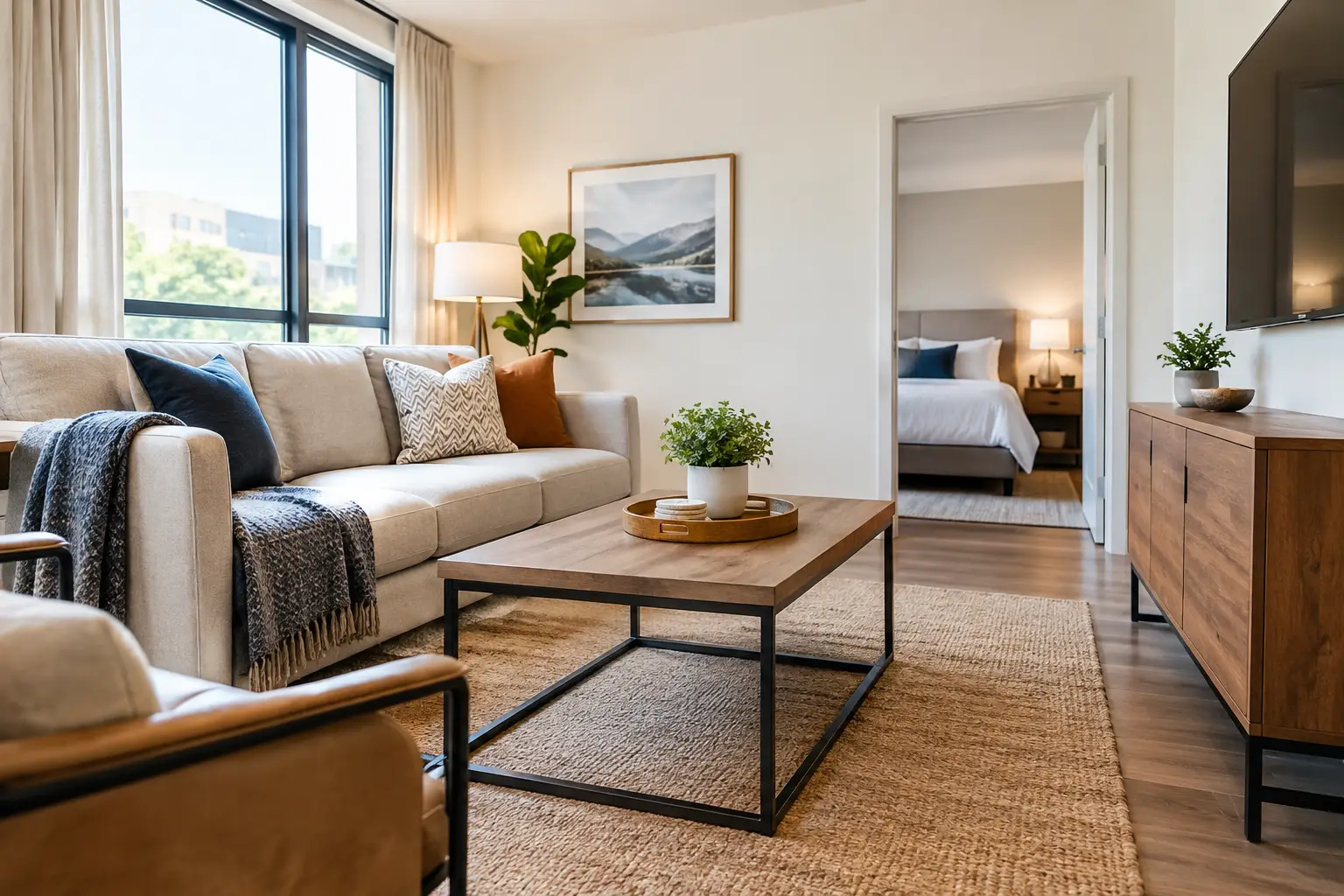
A short-term rental can have a desirable address, spotless finishes, and a competitive nightly rate, yet still disappear in a crowded search page. The difference is often the room guests see first. Knowing how to furnish a short term rental means designing for a decision made in seconds: Does this place look comfortable, useful, memorable, and worth booking?
For owners, investors, and property managers, furnishing is not simply a decorating expense. It is a revenue decision. The right layout, furniture scale, lighting, and guest-ready details can improve listing photos, support stronger reviews, reduce wear-related headaches, and help a property command attention during slower booking periods. The goal is not to fill every corner. It is to create a polished, practical stay that feels more considered than the next listing.
Start With the Guest, Not the Furniture
Before ordering a sofa or choosing a paint color, define the stay you are selling. A one-bedroom near a hospital may serve traveling professionals who need a quiet desk, dependable Wi-Fi, and a kitchen that works for a two-week stay. A home near restaurants, transit, or wedding venues may appeal to weekend groups who value flexible sleeping arrangements, a photo-worthy gathering space, and easy parking information.
This first decision shapes the entire furnishing plan. A family-friendly property needs durable surfaces, room-darkening window treatments, and a layout that leaves space to move around. A higher-end corporate rental may benefit from a more tailored dining area, substantial bedside tables, and elevated art that makes the unit feel residential rather than temporary.
Avoid trying to appeal to everyone. Broad appeal often produces generic rooms. Instead, identify the primary guest and a secondary guest, then furnish for their real routines. When a rental looks like it understands the traveler, it earns trust before the guest has read a single review.
Build a Layout That Sells the Stay
The most expensive furnishing mistake is buying pieces individually without a room plan. A sofa may look perfect online and still overwhelm a compact living room. A dining table may technically fit but block the path from the kitchen to the bedrooms. Poor flow makes a rental feel smaller, less comfortable, and harder to photograph.
Start with accurate measurements, including doorways, stairwells, elevators, and clearance around beds and seating. Then establish the function of each zone. In the living room, guests need comfortable seating, a surface for drinks, convenient charging, and a clear view of the television. In a bedroom, they need an inviting bed, accessible lighting, luggage space, and enough storage to unpack.
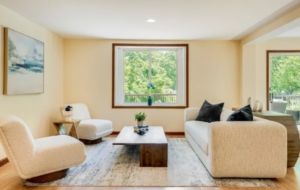
Scale is where professional planning pays off. A smaller sofa with a pair of accent chairs can make a compact room feel more open than an oversized sectional. In a larger home, a floating furniture arrangement can create an intentional conversation area instead of leaving seating pressed against the walls. Every room should have a focal point that reads beautifully in listing photos, whether it is a framed art moment, a styled bed wall, or a well-proportioned dining setting.
Prioritize the spaces guests photograph and remember
Not every square foot deserves the same budget. Put your strongest visual investment into the living room, primary bedroom, dining area, and outdoor space if one is available. These are often the images that stop a prospective guest from scrolling.
That does not mean secondary rooms should feel unfinished. It means they should be clean, cohesive, and functional rather than over-designed. A simple guest bedroom with a quality bed, layered linens, blackout shades, two charging points, and thoughtful artwork will outperform a crowded room filled with mismatched extras.
Choose Durable Pieces That Still Feel Elevated
Short-term rental furniture has to work harder than furniture in a private home. It will be used by many people with different habits, moved during cleaning, and photographed repeatedly. Choose materials that can handle that reality without making the space feel clinical.
Performance fabric sofas, washable rugs, wood or wood-look dining tables, upholstered beds with cleanable fabric, and nightstands with drawers are smart starting points. Favor medium tones and textured neutrals for larger pieces. They hide minor wear better than bright white while giving you room to refresh the look with pillows, throws, art, and seasonal accessories.
There is a trade-off between low cost and replacement cost. A bargain dining chair that wobbles after six months is not a value. On the other hand, not every item needs to be luxury grade. Spend more on mattresses, sofas, dining chairs, rugs, window treatments, and lighting. These affect comfort, durability, and perceived quality. Save strategically on easily replaceable décor, side tables, and some accent seating.
Avoid furnishing solely from one matching collection. Coordinated does not have to mean identical. A layered mix of finishes and textures gives a rental the collected, comfortable look guests associate with a well-cared-for home.
Furnish for Comfort Beyond the Photograph
A beautiful listing earns the click. A comfortable stay earns the review, repeat booking, and recommendation. Guests notice the details that make daily routines easy: a place to put a suitcase, hooks for towels, a lamp beside the bed, a full-length mirror, and enough surfaces to set down a coffee or phone.
Use this practical baseline as you outfit each rental:
- Provide a real workspace when your guest profile includes business travelers or longer stays.
- Include nightstands and reading lamps on both sides of beds whenever the room allows.
- Offer a dining surface sized for the advertised occupancy, not just the number of bedrooms.
- Add closed storage for cleaning supplies, extra linens, and owner-only items so daily visual clutter stays out of sight.
- Plan layered lighting with overhead fixtures, table lamps, floor lamps, and task lighting where guests need it.
Lighting deserves particular attention. Harsh overhead light can make even a well-furnished space feel flat and impersonal. Warm, layered lighting creates a more inviting mood, improves evening photos, and gives guests options for reading, working, relaxing, or getting ready.
In the kitchen and bathrooms, continue the same standard of intentionality. Counter space matters, but so do organized drawers, sturdy stools, attractive dispensers, ample hooks, and clear places to store personal items. A rental should feel easy to use on the first night, when guests are tired and unfamiliar with the space.
Create a Cohesive Look Without Over-Theming
Short-term rentals benefit from personality, but heavy themes can date quickly and narrow the audience. Rather than turning every wall into a literal beach, city, or farmhouse statement, use a refined concept rooted in color, texture, and local character.
A rental in Northern New Jersey might draw on warm oak, tailored upholstery, soft blue-green accents, and art with an architectural or natural point of view. The result can feel connected to the area without relying on novelty signs or predictable décor. Thoughtful regional references give guests a sense of place while keeping the property sophisticated enough for business and leisure travel.
Choose one anchor palette and repeat it in restrained ways. For example, a warm neutral foundation with charcoal, cognac, and muted green can carry from the entry through the living space and bedrooms. Vary the materials so the rooms do not feel flat: combine linen-like upholstery, wood, woven textures, matte metal, and art with scale.
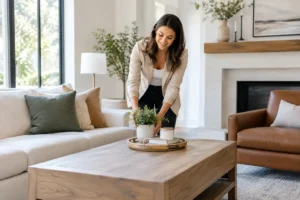
Keep surfaces styled, not crowded. A coffee table needs room for a guest’s actual coffee. A bathroom counter needs room for toiletries. The most successful rental styling feels welcoming in photos and easy to live with after check-in.
Plan for Operations Before Installation Day
A beautiful unit that is difficult to reset between guests can quietly erode profit. Before installation, decide where backup linens, towels, paper goods, cleaning tools, and replacement décor will live. Measure closets and storage areas as carefully as you measure the living room.
Create a simple inventory for items that are easy to lose or damage, such as remotes, hair dryers, dining chairs, lamps, and cookware. Select duplicates for high-use essentials when possible. If a bedside lamp breaks on a Friday, replacing it with an exact match is far easier than starting the design process again mid-season.
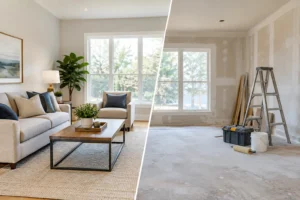
Installation should also be planned as a single coordinated moment. Deliveries arriving over several weeks create clutter, missed details, and lost booking days. A complete furnishing plan allows the property to move from empty to listing-ready with furniture placement, art, window treatments, accessories, and final styling handled in sequence.
For owners who want a faster path to a photo-ready property, a designer-led furnishing team can bring the advantage of merchandising knowledge, established sourcing, and installation coordination. Set the Stage® approaches rental interiors with the same visual discipline that helps properties make a stronger first impression in the market.
Treat Your Listing Photos as Part of the Furnishing Plan
Do not wait until the end to think about photography. Furnish each room with the camera angle in mind. Beds should have visual presence from the doorway. Seating should frame a natural focal point. Window treatments should soften the room without blocking the light. Dining spaces should look ready for guests, not like an afterthought squeezed beside the kitchen.
Before photography, remove excess signage, personal branding, cleaning supplies, and anything that distracts from the room. Then add enough finishing layers to communicate comfort: crisp bedding, a restrained throw, art, greenery, and a few useful accessories. This is where the property shifts from furnished to bookable.
The best short-term rental interiors do more than look expensive. They make guests imagine arriving, settling in, and enjoying the space. Make that feeling easy to see, easy to use, and easy to maintain, and your furnishings will keep working long after the photos are taken.