
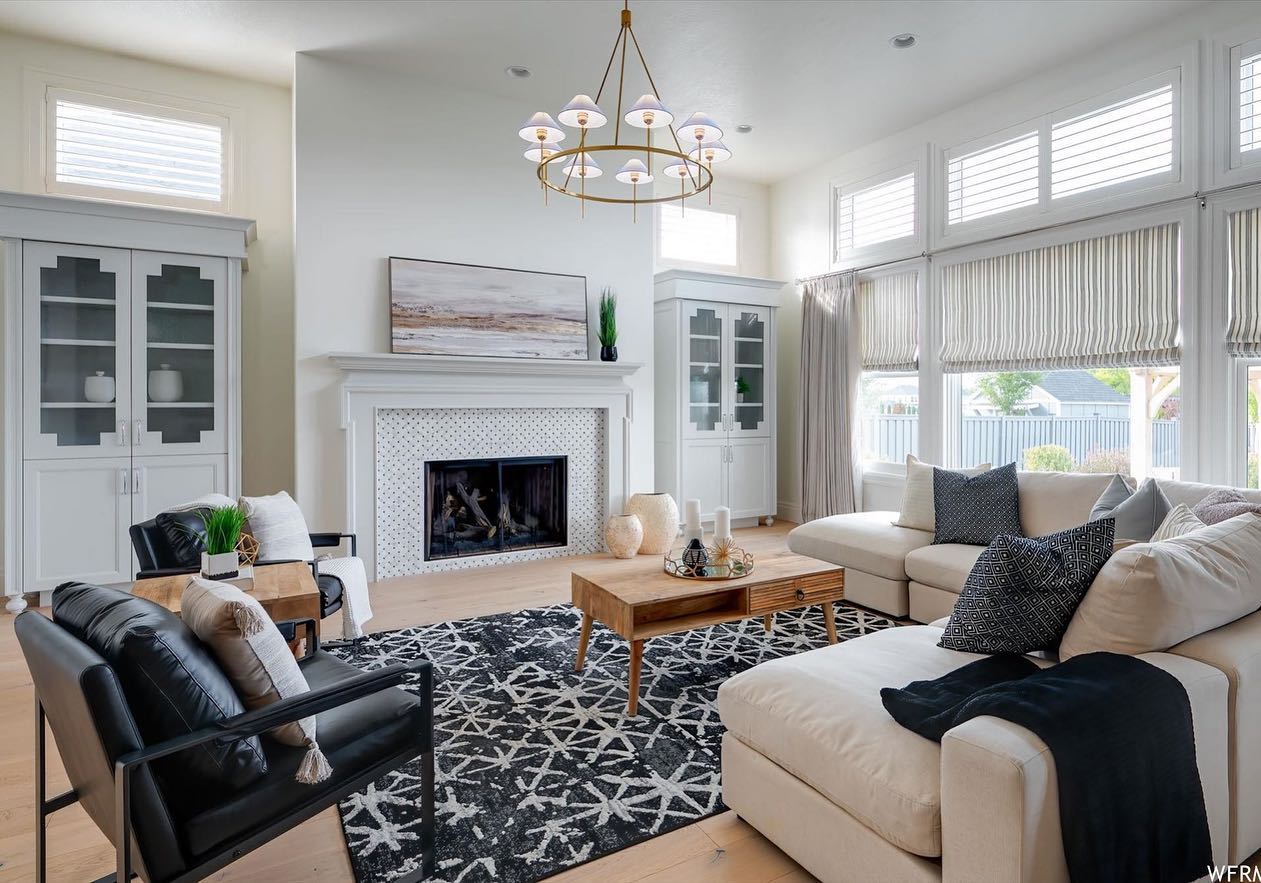
And why sellers in Morristown, Livingston, Short Hills, Montclair, and Springfield should pay attention
Home staging is no longer a niche luxury—it’s a strategic tool that helps homes sell faster and for more money. Yet despite its proven value, some persistent myths still cloud the conversation. Let’s clear the air.
❌ Myth 1: “Buyers want to see the space empty.”
✅ Reality: Most can’t visualize scale or flow.
An empty room might seem like a blank canvas, but for most buyers, it’s more like a puzzle with missing pieces. Without furniture, it’s difficult to gauge whether a king bed fits in the primary bedroom, or how a sectional might flow in the living room. Staging provides context—it shows how traffic moves through the space, how natural light interacts with furnishings, and how each room can be used. This is especially important in markets like Short Hills, Montclair, and Livingston, where buyers expect a polished presentation and often tour multiple homes in a single weekend. A staged home stands out—and sticks in their memory.
❌ Myth 2: “Staging is only for luxury homes.”
✅ Reality: Every home benefits, from condos to estates.
Staging isn’t about extravagance—it’s about strategy. Whether you’re selling a modest condo in Springfield or a stately colonial in Short Hills, staging helps highlight a home’s strengths and minimize distractions. In smaller homes, staging can make rooms feel larger and more functional. In older homes, it can modernize the look without costly renovations. And in every case, it helps create emotional appeal, which is what truly drives offers. Buyers aren’t just purchasing walls and windows—they’re buying a feeling. That’s true whether they’re shopping in Morristown’s walkable downtown or Livingston’s family-friendly neighborhoods.
❌ Myth 3: “It’s too expensive.”
✅ Reality: It often costs less than your first price reduction.
Let’s talk numbers. A typical price reduction might be $10,000 or more. Professional staging often costs a fraction of that—sometimes as little as $1,500 to $3,000 depending on the scope. And staged homes tend to sell faster, reducing carrying costs like mortgage payments, utilities, and insurance. In competitive markets like Morristown and Livingston, where buyers move quickly, staging can be the difference between a bidding war and a stale listing. In other words, staging isn’t an expense—it’s an investment. One that often pays for itself many times over.
💡 Final Thought
Staging isn’t about decorating—it’s about storytelling. It helps buyers see not just what a home is, but what it could be. And in today’s competitive market—from Springfield’s starter homes to Short Hills’ luxury listings—that vision can make all the difference